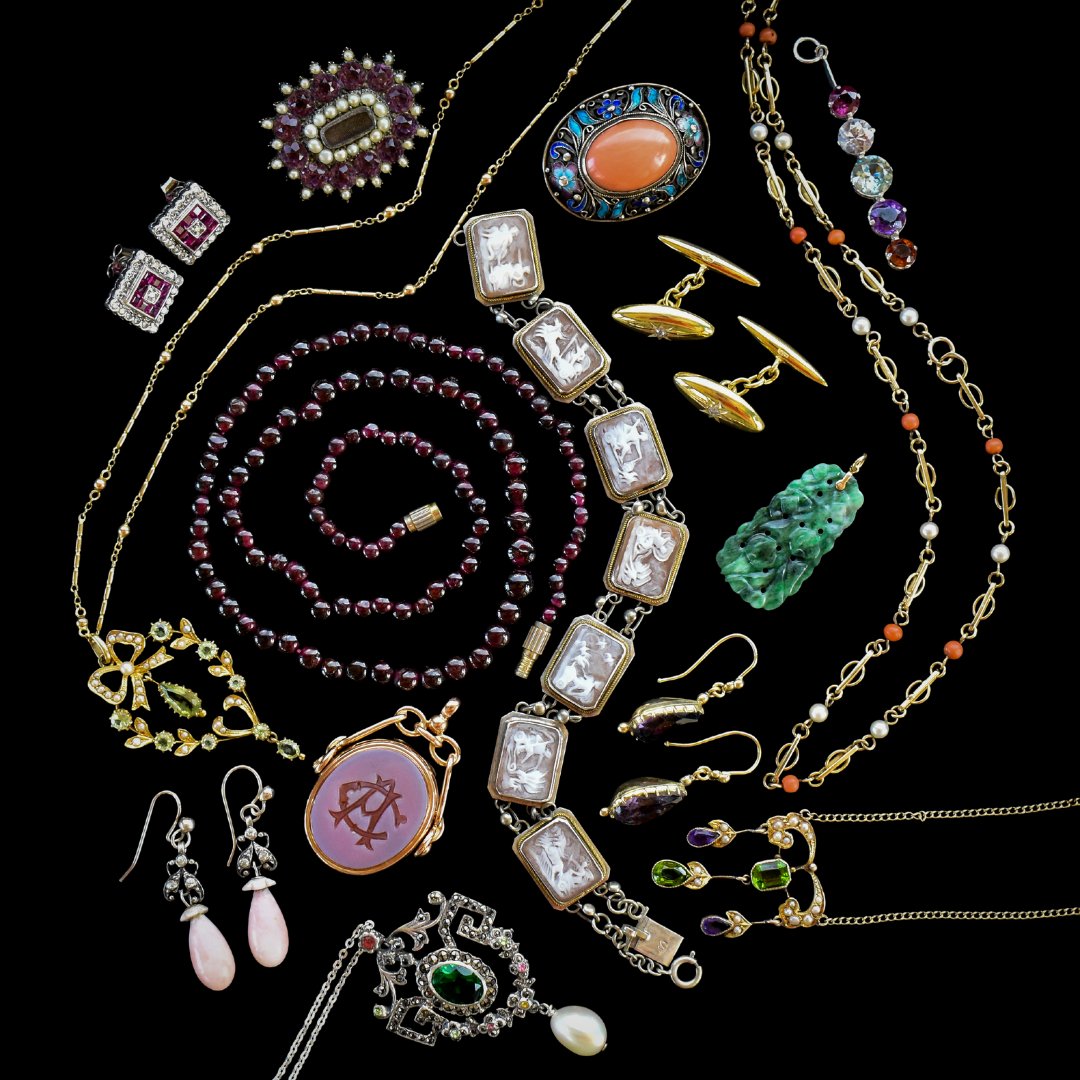


Here’s How to Find Out!
We all have that little box tucked away somewhere - on the dresser, in a drawer, or hidden in the back of the wardrobe. A collection of bits and bobs, tangled chains, or a ring you’re not quite sure where it came from. But what if… one of those pieces is worth more than you think?
At Lancastrian Jewellers, we love a good jewellery mystery. Whether it’s a forgotten family heirloom or something picked up at a car boot sale, we’re here to help you figure out if your old jewellery is simply sentimental or potentially valuable. And who knows? You might be sitting on a little treasure chest.
Here’s what to look for when valuing your old jewellery:
1. Gemstones: Are They the Real Deal?
When checking a piece with a gemstone, look closely. Real gemstones often have natural imperfections - these are called inclusions and they can be tiny air bubbles, crystals, or feathers trapped inside the stone. They give depth and character, and ironically, these “flaws” can actually be signs of authenticity.

Also, look at the way the light moves through the stone. Is it lively? Does it catch the light and reflect different colours? Real gemstones have a sort of glow and depth that glass or plastic simply can’t replicate.
2. Hallmarks: Jewellery’s Tiny Signature
Flip the piece over. See any tiny marks stamped into the metal? Those are hallmarks - and they’re a great clue! Hallmarks can tell you the metal’s purity, where and when it was made, and sometimes even who made it.
 Gold, silver, and platinum each have different sets of marks. Not sure what yours means? Check out Our Guide to Hallmarking! Or take a photo and send it our way - we’d be happy to help de-code it for you.
3. Weight: Heavier Often Means Better
With gold and silver jewellery, weight can make a difference. Real gold is dense - so a heavy, solid piece is usually worth more than something light and hollow.
If you know it’s gold, get a digital kitchen scale and weigh it (preferably in grams). This can give you a rough estimate of the melt value (what the metal itself is worth). While this doesn’t account for craftsmanship or gemstones, it’s a handy starting point.
Gold is traded on global markets, and like any commodity, its price can change daily -even hourly! The good news? In recent years, gold has generally stayed high, making now a very good time to sell if you’ve got unwanted gold jewellery lying around.

The price you’ll see quoted online is called the "spot price" - this is the price per gram or per ounce of pure gold. But remember: most jewellery isn’t 100% gold. It's usually 9ct, 14ct, 18ct, or sometimes 22ct. The carat (ct) tells you how much actual gold is in the piece.
Here’s a quick cheat sheet:
24ct gold = 99.9% pure
22ct gold = 91.6% pure
18ct gold = 75% pure
14ct gold = 58.5% pure
9ct gold = 37.5% pure
So if you weigh a ring and it’s 10 grams of 18ct gold, only 7.5 grams of that is pure gold -which is the part we calculate value from. Check out our blog post on "Is Antique Gold Jewellery a Good Investment?" to learn more about gold prices.
4. Still Not Sure? That’s What We’re Here For!
If you’ve ticked a few of the boxes above and are wondering whether you have something special, we're happy to help!
At Lancastrian Jewellers, we love seeing old jewellery and helping our customers understand what they have. We’re always happy to offer advice where we can, and if you’re looking to sell, we’re actively buying second-hand and antique jewellery too.
Once we’ve had a chance to inspect your item, we’re happy to make you a no-obligation offer for your unwanted gold or vintage pieces.
Let’s Chat!
Whether you’ve uncovered a potential heirloom or just want to know more about a curious old brooch, don’t hesitate to get in touch. Send us a message or drop us an email with some photos and we’ll take it from there.
Your old jewellery might just have a new story waiting to be told.


