

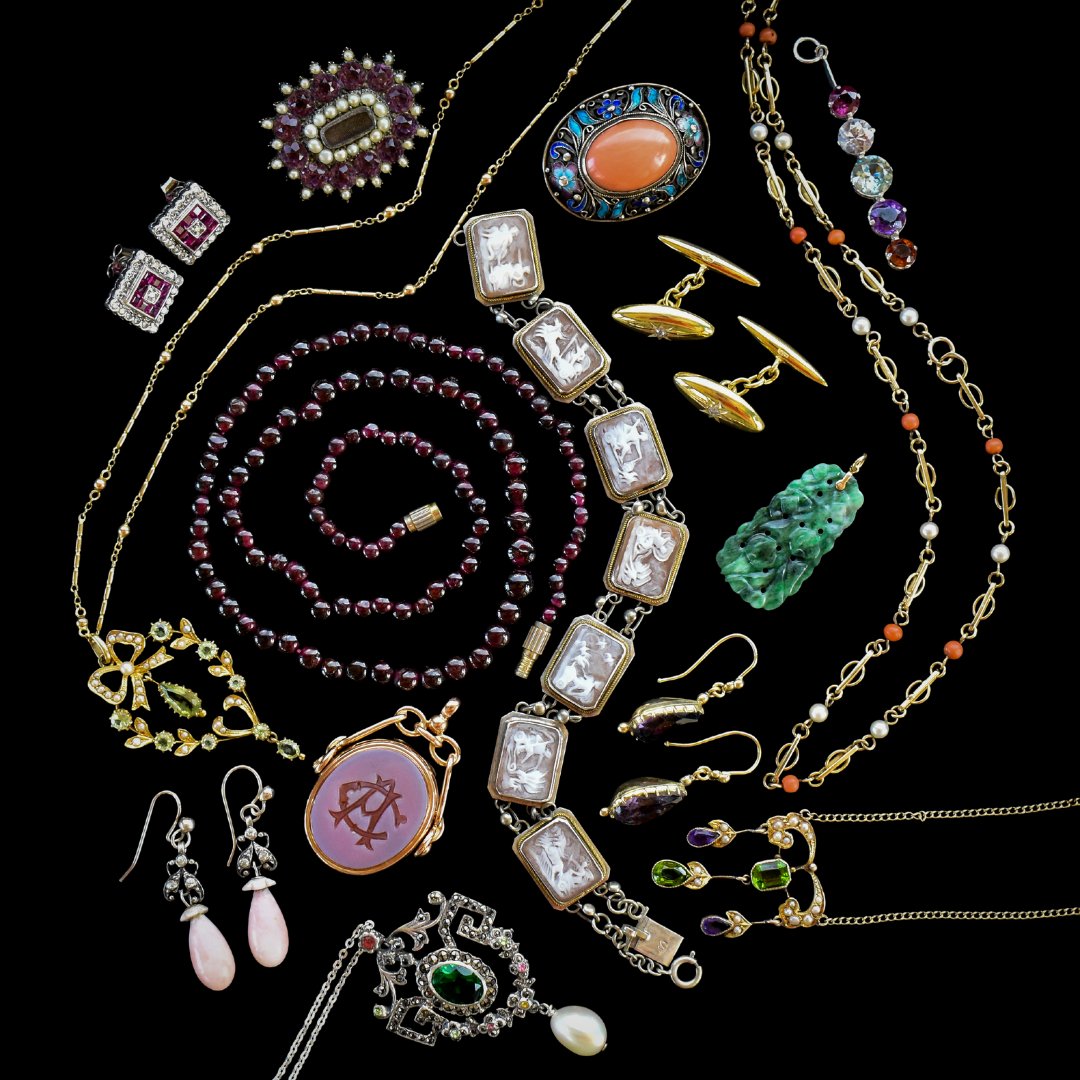


Often used interchangeably, there is some debate about whether antique and vintage jewellery are actually the same thing.
As a third-generation vintage and antique jewellers, we’re here to break down the differences between the two, and provide direction on which products you may like from each era.
We know that navigating the world of antique jewellery is complex, which is why we’re always around to answer your queries on the products we sell.
Is Vintage and Antique Jewellery the Same Thing?
We’ll answer this question first - no, vintage and antique jewellery are not the same thing. What does it come down to? The age. Vintage jewellery only has to be at least 20 years old, whereas antique pieces need to be over 100 years old.
Today, this means that anything before the 1920s is considered antique, encompassing the Georgian (1714-1830), Victorian (1837-1901), Art Nouveau (1890-1910) and Edwardian (1901-1910) eras. The Art Deco era (1920-1930) is on the cusp between vintage and antique, finding its place formally in the latter in the next few years. Vintage jewellery is therefore anything that comes after these periods, such as the Retro and Mid-Century/Modern eras.

Antique vs Vintage Jewellery: Differences to Look For
We clearly state the era of all the pieces we sell on the individual product listing, but if you have heirlooms or are looking to sell antique jewellery, then there are a few indicators to look out for to know if your pieces are authentic.
1. Hallmarks: A classic indicator of antique jewellery is the hallmark, a small stamp indicating the metal purity, city of assay, or maker’s initials that you’ll find inside a ring, clasp, or on the back of pendants. Hallmarking is still practised today, and is a good way to tell when and where your piece was validated.
2. Craftsmanship Style: If your piece is lacking hallmarks or they have worn away, there are slight differences in the craft style of antique and vintage jewellery. Antique styles are often hand-engraved, and as a result, may be subtly imperfect. They’ll also typically have hand-cut stones like Old Mine or Rose cuts. Vintage jewellery is more precise thanks to evolving tools and technology, with modern stone cuts or styles from the 1940s to 70s.
3. Materials: Most antique jewellery is made from yellow gold or sterling silver, as white gold wasn’t readily available until the 1910s. White gold pieces are not usually considered antique.
4. Patina: A patina is a thin, natural surface transformation typically found on older pieces of jewellery, formed through oxidation. It can make jewellery look slightly red or grey, and give it a ‘matte’ texture. These are typically found in antique pieces due to years of wear, but can also appear on vintage styles.
These are guidelines and are not a definitive list of the differences between the two types of jewellery. If you’re unsure, a certified jewellery expert should be able to help.

Antique Jewellery: Eras
If you’ve managed to establish whether a piece is 100 years or older, it can then be difficult to narrow down the exact era it comes from.
Georgian Jewellery (1714-1830)
This era is defined by neoclassical influences, nature, and grandeur, reflecting the significance of status at the time. Jewellery was handmade, using thin sheets of gold or silver. You may see intricate repousse (hammered) work and closed-back settings where gems are foiled for extra sparkle.
Victorian Jewellery (1837-1901)
A time of change, revolution, and growth, the Victorian era was also incredibly romantic, with the dawn of mourning jewellery in particular. Sentimental elements, like hearts, symbols of nature and even locks of human hair are typical signs that the piece is Victorian.
Art Nouveau Jewellery (1890-1910)
The Art Nouveau period, overlapping with Victorian times, was known for its appreciation of the natural world and parting from tradition. As such, jewellery from this era often featured flowers, leaves, insects, using an intricate enamelling technique.
Edwardian Jewellery (1901-1910)
At the dawn of a new century, Edwardian times were the final flourish of aristocratic opulence before the dawn of World War I. This era of jewellery had light, delicate, and ‘lacy’ designs with decadent stones like diamonds and pearls. You’ll also begin to see a more frequent use of white gold and platinum during the Edwardian period.

Antique and Vintage Jewellery from a Specialist Retailer
Our family have been involved with antique and vintage jewellery for three generations, and we’ve been helping customers across the world find their perfect vintage and antique pieces here at Lancastrian Jewellers.
Whether you have your eye on a certain piece or need guidance from our team, we’re here to lend a hand.
Ready to discover your next vintage or antique item? Browse our website today


