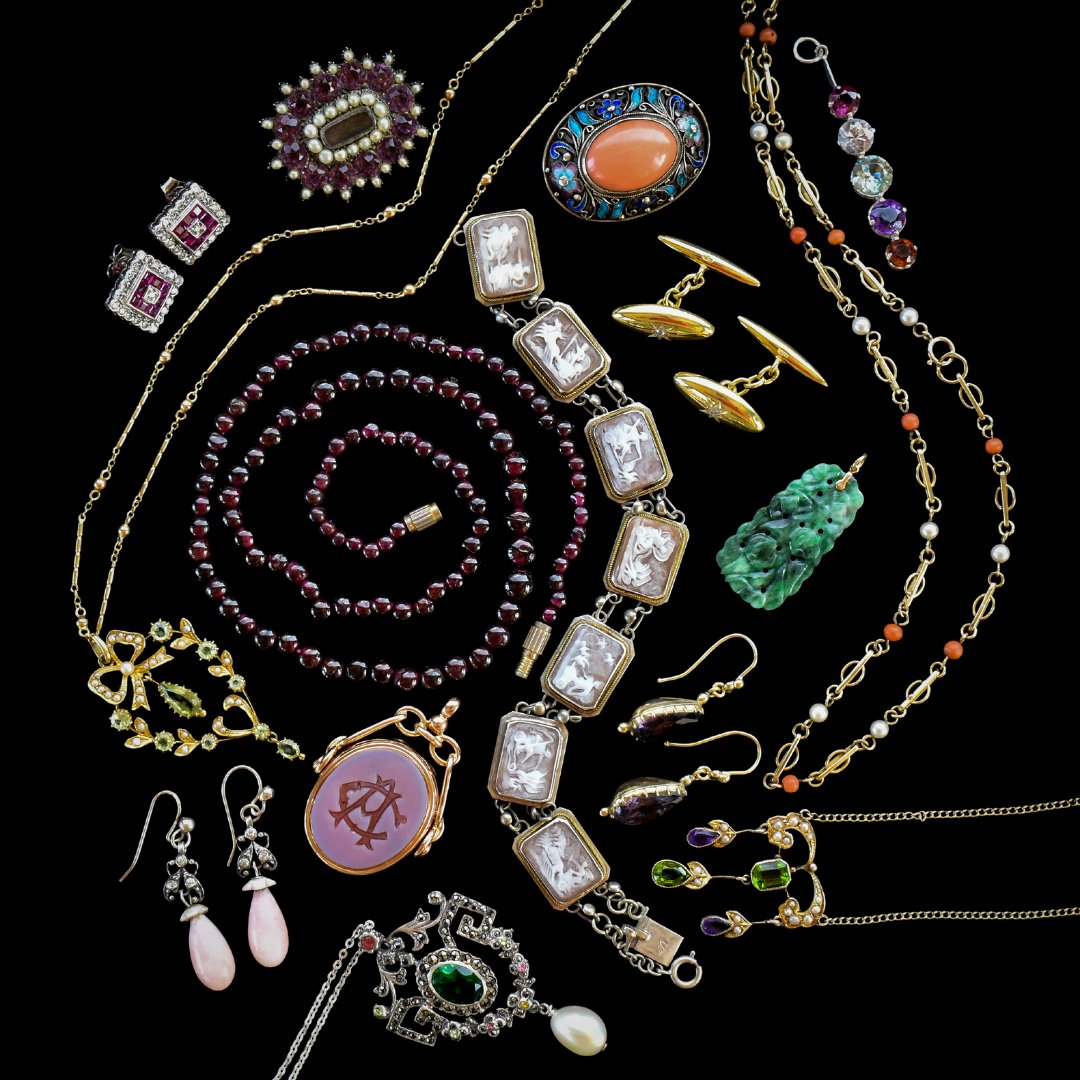


It’s spooky season once again, and those with an interest in all things gothic and supernatural will find themselves called to channel their inner witch. But we weren’t the only ones who enjoyed wearing darker colours in our jewellery to embrace the changing of seasons. Victorian gothic jewellery is an entire subgenre of antique jewellery, involving jet blacks, intricate designs and other symbols of mourning.
We’re here with 6 incredibly witchy picks to add to your basket this autumn - whether you’re styling an outfit for Halloween or just embracing a gothic style.

What’s the story behind Victorian Gothic Jewellery?
Victorian Gothic is a style, literature, and overall thinking that was prevalent during Queen Victoria’s reign. It centres around themes of horror, mourning, and scientific experimentation, reflecting fears of the time as the world moved towards a more industrial society. In fashion and jewellery, wearing black became a trend, inspired by Queen Victoria’s decades-long grief over Prince Albert from 1861. Now, gothic and witchy styles take much of their inspiration from this period, so much that it’s become its own subgenre marked by historic influences and memento mori (symbols of death).
1. Crescent Moon Jewellery
Witchy jewellery must only start in one place, and that’s with the moon. Witchcraft incorporates the moon in many of its rituals and spells, and the two have been intrinsically linked for centuries. If you lean into witchy or gothic styles, you’ll most likely have crescent moons somewhere in your collection, but why not treat yourself to a new one? After all, it’s a design that will never go out of style.

2. Signet Rings
The signet ring has come back into style over the past few years, traditionally made as a family heirloom and often engraved with initials. Whilst they don’t possess a particularly dark colour, they work excellently for creating stacks with other pieces, and especially when you buy a vintage signet ring you’re adding a touch of history to your style.
3. Citrine Jewellery
This one’s definitely for those who want to get autumnal, but still want to keep a pop of colour in their jewellery. Citrine radiates a natural, honey-like colour, works beautifully in necklaces, rings, and more, and is coincidentally associated with abundance, success, and wealth. And, if you’re a November baby, it’s your birthstone.

4. Dramatic Pendants
Vintage pendants are so versatile; there are often no two designs that look the same. Witchy jewellery is often dramatic and the focal piece of an outfit, so what better way to lean into that than with a statement pendant. Whether it’s a large gemstone set in gold or silver or an intricate layering of several stones, these necklaces are built to be paired with a flared sleeve and lace.
5. Victorian Mourning Jewellery
Themes of death and memento mori are a big part of Victorian gothic jewellery, and nothing reflects this more than a piece of mourning jewellery. As a way to grieve, the Victorians would take a piece of their loved ones’ hair and place it in a ring, a brooch, or another item of jewellery. This kept the deceased close to their heart, and is almost a time capsule of this period of history.

6. Garnet Jewellery
In a similar vein to Citrine, this one’s for those who want to keep the colour but add the witchiness. Garnet is a deep red stone, reflecting the deep hues of the leaves turning dark at this time of year. It has a crimson, almost blood-like colour and works particularly well in vintage gold jewellery.
Discover Witchy Jewellery from Lancastrian Jewellers
If witchy is your vibe, we regularly stock unique finds from the Victorian era and more that help you achieve this exact look. Rest assured, no two pieces are the same, so you’ll always have individuality when wearing vintage jewellery.
We regularly bring you our latest drops and product recommendations in our email newsletter, sign up today and receive 10% off your first order.


